CASE STUDY
VR Assessment and Integration
Capability: VR
3 min read
What?
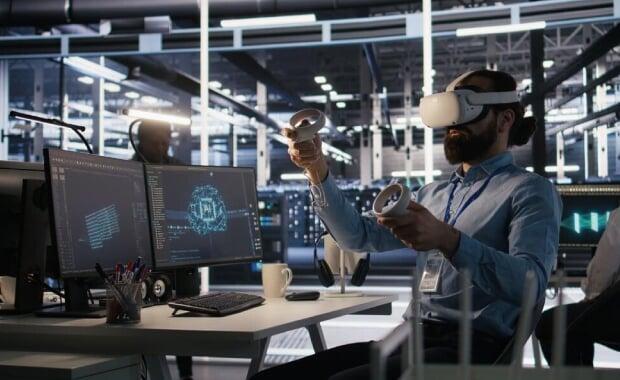
A client sought to introduce Virtual Reality (VR) technology into its engineering workflows to enhance CAD visualisation, improve remove collaboration, and accelerate digital prototyping. The objective was to assess existing processes, define VR system requirements, design an appropriate hardware/software solution, and ensure staff were fully trained to adopt the new capability.
How?
RC Fornax assessed the client’s current engineering processes, technology landscape, and strategic goals to identify where VR would provide the greatest operational value.
This was followed by a system design and specification phase, where we recommended suitable VR hardware (headsets, controllers, sensors, and high-performance workstations), along with the most appropriate software platforms. Options included commercially available CAD-integrated VR tools and customer development pathways using Unity of Unreal Engine. Environmental and spatial considerations were also defined to ensure safe and effective usage of the system in its intended environment.
To ensure adoption, we delivered training sessions enabling engineers, designers, and support staff to confidently operate and maintain the VR systems. Finally, client feedback was collected, culminating in final recommendations for further improvements to plan for wide-scale deployment of VR within the organisations development process.
Result
The benefits of VR were demonstrated to the organisation, showing how it could be used to contribute to enabling immersive design reviews, and improve collaboration between distributed teams.
